Parole Board
Featured
About us
About
The Parole Board is an independent body that carries out risk assessments on prisoners to determine whether they can be safely released into the community.
Our Commitment to Victims of Crime
Guidance
Improving victims engagement in the parole process
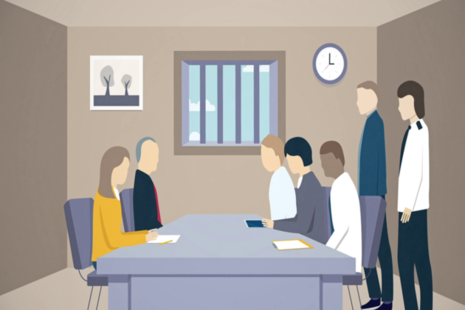
How we make our decisions
Guidance
The Parole Board decides whether prisoners who are serving certain types of sentences can be released.

Decision Summaries
Guidance
Members of the public can now request summaries of parole decisions.
Routes of challenge
Standard
A Parole Board decision can be challenged through: The reconsideration mechanism, an application to set aside a decision and Judicial review
Latest guidance
Collection
Latest guidance from the Parole Board.

Latest from the Parole Board
What we do
The Parole Board is an independent body that carries out risk assessments on prisoners to determine whether they can be safely released into the community.
Parole Board is an executive non-departmental public body, sponsored by the Ministry of Justice.
Follow us
Documents
Transparency and freedom of information releases
Our management


Contact Parole Board
General Enquiries
Floor 3
10 South Colonnade
Canary Wharf
London
E14 4PU
United Kingdom
Telephone
020 3880 0885
Media Enquiries
The Parole Board for England and Wales
Floor 3
10 South Colonnade
Canary Wharf
London
E14 4PU
United Kingdom
Telephone (office hours)
020 3880 0809
Telephone (out of hours)
07540 258997
Please be aware that the Parole Board will not comment on details of individual cases.
Chief Executive
The Parole Board for England and WalesFloor 3 10 South Colonnade
Canary Wharf
London
E14 4PU
United Kingdom
Chair
The Parole Board for England and Wales
Floor 3
10 South Colonnade
Canary Wharf
London
E14 4PU
United Kingdom
Legal Adviser
Floor 3
10 South Colonnade
Canary Wharf
London
E14 4PU
United Kingdom
Telephone
020 3965 4455
Responsible for handling all litigation matters.
Representations
The Parole Board for England & Wales
Floor 3
10 South Colonnade
London
E14 4PU
United Kingdom
You can send parole representations to MCA@paroleboard.gov.uk if a parole review is at the Member Case Assessment (paper) hearing stage and you do not have the case manager's email address. Representations must be sent by email, unless a prisoner is sending in their own handwritten representations.
Make an FOI request
- Read about the Freedom of Information (FOI) Act and how to make a request.
- Check our previous releases to see if we’ve already answered your question.
- Make a new request by contacting us using the details below.
Freedom of information enquiries
The Parole Board for England and WalesFloor 310 South Colonnade
Canary Wharf
London
E14 4PU
United Kingdom
Subject Access Requests
The Parole Board for England and WalesFloor 310 South ColonnadeCanary Wharf
London
E14 4PU
United Kingdom
Read more about how to make a request at the Information Commissioner's Office website: https://ico.org.uk/your-data-matters/your-right-of-access/
Corporate information
Jobs and contracts
Our Personal information charter explains how we treat your personal information.